Volunteers across the country are setting up their first community tree nurseries as part of The Tree Council’s Growing Together programme, supported by leading savings and investment company, M&G plc. Thirty-five groups are busy designing growing spaces, drawing up plans and setting out irrigation systems. For some, the trees will be woven into existing community growing spaces, amongst vegetables at an inner-city farm or within a community allotment. For others, a whole new site is being set up, tucked away at the back of a school or alongside a residence for those with additional learning needs.
Growing Together was born out of the findings from The Tree Council’s Trees Outside Woodland research project, delivered in partnership with Defra, Natural England and five local authorities. The project identified a network of 80 community tree nurseries in the UK. These were often small nurseries, each producing around 500 – 1,000 trees, indicating that small efforts, when repeated widely, can make a big impact. The report identified that bespoke and tailored support for lead volunteers at community tree nurseries could unlock growth.
The Tree Council has identified five key steps to setting up a community tree nursery. So far, the new community tree nurseries have completed the first two steps – understanding what trees they intend to grow and why. This includes identifying the growing site, planning out water sources and finding volunteers.
The five steps of Growing Together:
- Planning and research
- Building your growing space
- Gathering seed or grafting
- Growing and nurturing
- Planting out and monitoring

A plot of Camphill Blair Drummond’s new tree nursery site at Stirling in Scotland. Credit: Google 2023, Maxar Technologies
Katie Rafferty, Tree Council National Schools Programme Manager says:
“It’s brilliant because a lot of our groups are repurposing space they already have. All across the country people have put aside space to grow vegetables or attract wildlife – we are now introducing trees to the mix! You only need 2.5 metres by 1 metre to grow 300 trees from seed – so it really isn’t much space. The key is to ensure you have a good reliable supply of water and enthusiastic volunteers.”
The team will also be trialling ‘tree tables’ at six new community tree nurseries. A tree table is an air pruning bed – an efficient, and self-sustaining way to grow hundreds of trees in a small area. It consists of a raised, open-bottom platform often made of mesh or wire (see image) designed for seedlings to grow superior root systems. By elevating containers and pots, air dries out the root tips upon contact, forcing the plant to create a dense, fibrous root network that doesn’t spiral in the pot and improves transplant survival.

Tree table bed at Llanishen High School
Along the way, these groups will follow the seasons and progress through each stage of the growing cycle, learning all the skills and knowledge needed to grow trees, including fruit tree ‘grafting’ – the art of combining two trees together.
Sarah Scriven, Tree Council Regional Co-ordinator says:
“Grafting trees is a skill that most adults haven’t tried, and yet here are all these school students having a go – hopefully it’ll be a skill they can pass on, and may even inspire interest in taking up green careers in the future”

Students at St Andrew’s Junior School in Derbyshire practising the art of the graft on willow. The team has a rhyme to help students remember the steps: “Cut, fit, wrap, dip!”
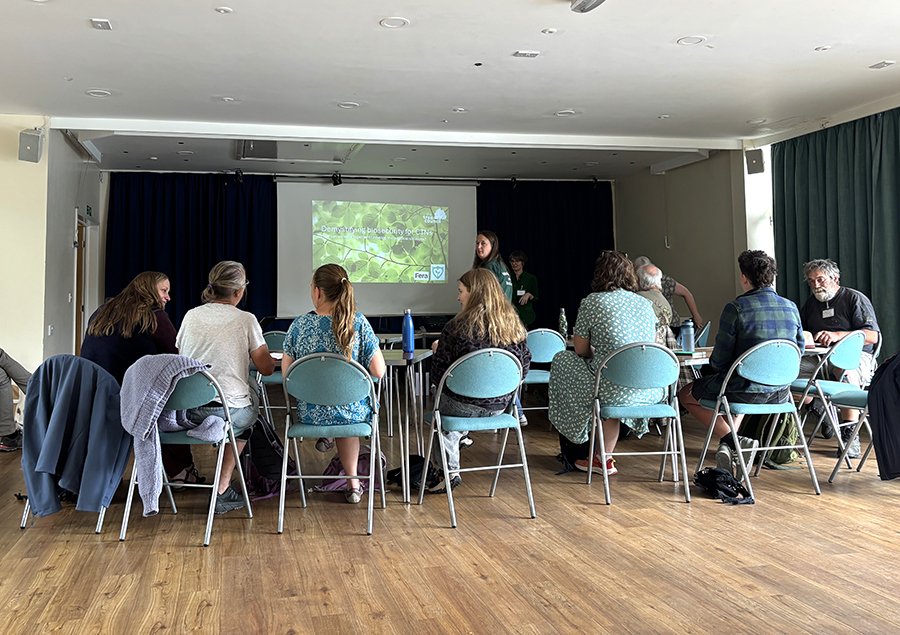
Growing trees comes with a responsibility to practice good ‘biosecurity’. With more plant pests and diseases appearing in the UK, it’s crucial that trees supplied for community planting projects are known to be healthy. Tree nurseries of any size can unintentionally spread harmful pests and diseases through live plants, soil, boots, tools, water and vehicles. Simple steps like cleaning boots and nursery equipment and checking trees for leaf insect damage, spotting or dieback can dramatically help minimise this risk.
Thanks to funding from Defra and M&G plc, The Tree Council is providing free biosecurity ‘starter kits’ to CTNs across the country this year. The kits include biosecurity information posters, boot brushes and picks, tool cleaning spray, a bucket and biohazard disposal bags to support groups to stay vigilant and take steps to prevent the spread. We will also be supporting CTNs with practical biosecurity training webinars in the months to come.

Example of biosecurity poster
Download biosecurity poster here
Growing Together is supporting the growth of the community tree nursery sector through targeted action. To find out more about the programme visit www.treecouncil.org.uk/growing-together. The programme was inspired by the findings of the Trees Outside Woodland report published last summer, take a look.
Interested in getting involved? Email us growingtogether@treecouncil.org.uk