Guidance Hub

Find practical resources for growing, planting, managing and monitoring trees and treescapes across the UK.

Tips, guidance and toolkits to help you care for trees and hedgerows.

The Guidance Hub brings together practical resources for a range of audiences on growing, planting, managing and monitoring trees and treescapes across the UK; from resources for schools and children to specialist information on agroforestry and the impacts of climate change on trees and treescapes.

About the Guidance Hub
A knowledge exchange project funded through the UK Treescapes programme

The Guidance Hub was developed as part of the Future Treescapes in National Landscapes project, which sought to explore and apply treescapes research in collaboration with farming and landscape professionals from the Chilterns National Landscape and beyond.

More about the Guidance Hub themes…

Growing trees from seed can mean you can grow a diverse range of tree species in keeping with a local area or landscape and select the best seeds and the strongest saplings to plant on. Trees grown from seeds collected in the local area or region may be better adapted to local conditions, such as climate and soil type and growing your own trees can reduce the cost of buying saplings.

What might you need to think about if you are collecting seeds and growing your own trees?

  • Some seeds may need pre-treatment before planting to help encourage germination, such as scarifying or extracting seeds from fruits.
  • You may want to store seeds, some species need to be planted soon after collecting, some store well, but how do you stop them from rotting or degrading?
  • Particular planting techniques, such as stratifying, can encourage germination in some species.

With tree growing and planting you could also consider natural regeneration – enabling woodland to expand naturally beyond its’ current size or limit through the natural movement of seeds. Natural regeneration can lead to a diverse woodland, with a mixture of tree species and ages and a spread of understory vegetation and other wildlife growing alongside new trees.

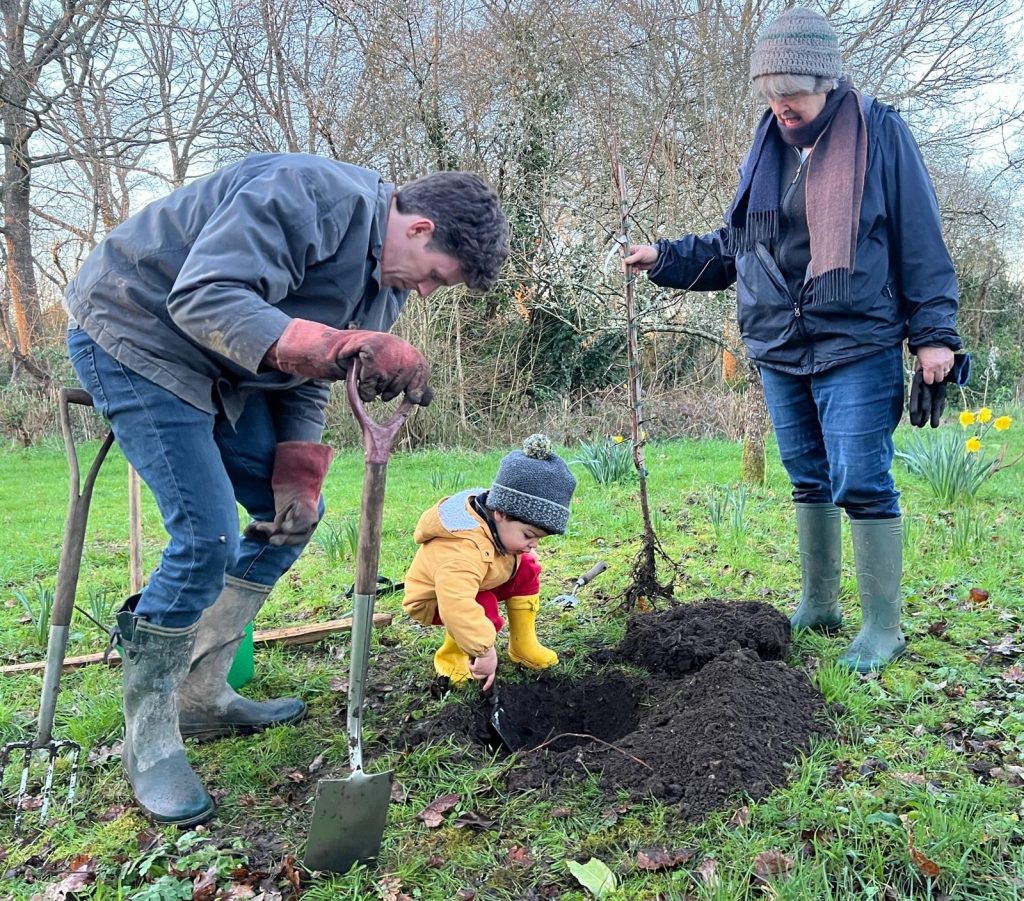
Trees can bring benefits to a wide range of rural and urban environments, in parks, gardens, hedgerows, agricultural land and rural landscapes. However, in order for trees to thrive and to benefit the landscapes they are planted in, we need to plant “the right trees in the right place”.

When planting we need to consider what species are best for the landscape, climate and situation. For example, within a National Landscape or National Park, what species currently grow and are in keeping with the character of the landscape? Which tree species are more likely to thrive in a lowland landscape, or on chalk soils? Those planting might need to consider the impacts that climate change could have on the landscape, climate change could lead to increasing numbers of extreme weather events, faster spread of disease and increase damage and stress to trees. Could this mean sourcing disease resistant varieties? Or planting a more diverse range of tree species?

Where trees, saplings and seeds are sourced from (their provenance) can be important. Locally sourced trees and native species may be better adapted to local conditions, be more beneficial to wide range of wildlife and better able to grow in local conditions. If you are planting trees or increasing woodland cover you could consider:

  • Collecting and planting seeds from the local area
  • Natural regeneration, enabling woodland to grow and spread naturally could encourage understory vegetation and local tree species
  • How seedlings and saplings can be protected from damage by deer, drought and disease, especially until they are established
  • How big the area to be planted is and how this might affect choice of tree species

It is also important to consider if tree planting is for a specific purpose, for example agroforestry, hedgerow creation or woodland pasture, to reduce the risk of flooding or to develop woodland specifically for wildlife.

How can woodland and trees be managed to help them achieve their full potential? Deciding on the best ways to manage individual trees or woodlands could depend on a variety of factors. You might want to develop a management plan to look at both short and long-term management aims and consider the impact of landscape and climate, the original reasons or purpose of the trees planted, the species of trees and the type of woodland.

Understanding the original aim or reason for planting trees can support understanding how to effectively manage them and determine which management techniques to use. For example, if the trees were planted for production of wood products, perhaps coppicing or pollarding would be effective management. Trees as part of a hedgerow? Appropriate management to maintain the structure of the hedgerow would be needed. If trees were planted as part of an agroforestry or silvo-pasture scheme they may need particular management so they can (for example) effective shade crops and livestock or produce fruit.

How could the landscape, climate, age of trees or woodland type influence how best to manage it? You might need to think about what would be best for ancient woodland, beech woodland, scrubby wooded areas, trees outside woodland (in hedgerows for example) and conifer or pine woodland.

You could also consider managing woodland and trees to support particular wildlife, for example managing woodland to encourage insect or bird species, or understorey vegetation. Understanding the type of woodland and how to manage it can encourage biodiversity and enable it to achieve its full potential.

Monitoring trees and woodland is important. From keeping tabs on newly planted saplings to checking mature trees for damage, pests and diseases so you can respond quickly to any problems arising.

What might you want to monitor and record?

  • Trees themselves, perhaps numbers, ages, size, condition, the presence of any pests or diseases
  • Understory vegetation, insect and mammal species or any protected species present in woodland or on individual trees
  • The impact of different management techniques, what difference does it make to, for example, understory vegetation if trees are managed through coppicing? How does having trees guards in place impact on sapling survival?
  • The impact of changing climate on your trees and woodland. If there is increased flooding or reduced rainfall, what impact could it be having on your trees, hedgerows or woodland?
  • Managing a particular area, woodland or lone trees – keep records of what management is undertaken and when

Is there potential to make that data available more widely? Data collected on trees and woodland can feed into a wider picture of the health and diversity of trees and woodland across not just local landscapes but the UK as a whole.

You could look into how local and national groups and organisations are keeping tabs on trees and woodland in your area, keeping records and sharing data more widely. You could find that data and information on local woodlands near to you or in similar landscapes could help to plan planting and management and to keep an eye for potential pest and disease spread.

You could also find an education or role for citizen science or volunteer groups to support not just monitoring your trees and woodland but also supporting planting and management.

Browse resources

The following resources are not intended to be exhaustive, but provide a selection of the information, guidance and research available focused on the practical aspects of planting, managing and monitoring trees and treescapes, particularly in the UK.

  • Only show:

  • Theme

  • Audience

  • Resource Type

  • Access

  • Clear search parameters...

Climate change and the future for broadleaved tree species in Britain

Under current definitions the majority of native broadleaf species are predicted to become unsuitable for commercial timber production in southern England. Genetic variability in local native populations may enable a degree of adaptation.
Audience:

Why thin woodlands?

Thinning woodlands is a valuable forestry practice that involves selectively removing trees to improve the health, resilience, and biodiversity of forest ecosystems. In this article, Chilterns Woodlands Project explore how thinning benefits woodlands, promotes ecological balance, and supports both human and wildlife communities in the face of changing environmental conditions.
Audience:

Creating new broadleaved woodland by direct seeding

This Practice Guide contains detailed recommendations for the establishment of new broadleaved woodlands by direct seeding, a silvicultural system whereby tree seed is sown by hand or machine into a prepared seedbed at a site intended for woodland creation.
Audience:

Damage to beech woodlands in the Chilterns by the grey squirrel

This study aimed to quantify the extent of grey squirrel damage, by bark stripping, to broadleaved trees in the 15 000-ha Chilterns Area of Outstanding Natural Beauty, and to estimate its impact on the potential to grow high quality broadleaved timber.
Audience:

The management of semi-natural woodlands: 8. Wet woodlands

This guide deals with the semi-natural woodlands dominated by alder, willows and birch that are found locally throughout Britain on wet and poorly-drained soils.
Audience:

The management of semi-natural woodlands: 7. Native pinewoods

This practice guide is one of a set of eight, which provide comprehensive advice on the management of native pinelands in Britain.
Audience:

The management of semi-natural woodlands: 6. Upland birchwoods

This pactice guide is one of a set of eight, which provide comprehensive advice on the management of ancient upland birchwoods in Britain.
Audience:

The management of semi-natural woodlands: 5. Upland oakwoods

This practice guide is one of a set of eight, which provide comprehensive advice on the management of ancient upland oakwoods in Britain.
Audience:

The management of semi-natural woodlands: 4. Upland mixed ash woods

This practice guide is one of a set of eight, which provide comprehensive advice on the management of ancient upland mixed ash woods in Britain.
Audience:

The management of semi-natural woodlands: 3. Lowland mixed broadleaved woods

This practice guide is one of a set of eight, which provide comprehensive advice on the management of ancient lowland mixed broadleaved woods in Britain.
Audience: